So much of life remains with little meaning without first seeing what was and what is and what is to come.

Some say he is Elijah. Wrong. He is greater than Elijah. Was he Elisha? No. He is more. And you and I are supposedly capable of greater than He.
I’ve seen today only a little of what is. Elisha parts the waters, like Moses, the God of Elijah makes himself known in the parting of the waters. Jesus parts the waters at his Baptism and at his death through his side. Elisha fills the jars with oil, Jesus asks for jars to fill with wine. Elisha lays upon the lad twice and calls him forth from the dead. Jesus bids the young girl Tabitha and the old man Lazarus to do the same. Both men heal the lepers. Both men give no heed to the Pharisees of their day. Both keep the Will of God and walk in His timing.
What strikes me most is the manner in which Elisha walks with God. He is unassuming of His power because his faith has seen it demonstrated before his own eyes from his teacher Elijah. He is not boastful because He is acutely aware of His power. God’s mercy is not hidden from him and so he walks with great obedience. Careful with his words and his feet. Elisha is not so much a friend of God as he is a devotee. Jesus demonstrates the same. Though his application seems more sincere. Where the prophet obeys with holy fear, the Son obeys with love.
Both walk with God. Both are in the world and not of it.
When Elijah delivers the judgement of God upon King Ahab and his household following the death of Naboth the Jezreelite, he does so as a messenger. Unlike Jonah, he does not attach himself to the word but instead to the Giver of the word. Knowing God’s mercy is abundant he understands the judgements of God can be delayed for the sake of the humble. Ahab humbles himself before God and so he is spared from having to witness the death of his sons and the destruction of his kingdom. Yet still the judgement comes.
Elisha acts similarly, having witnessed his predecessor, when the leperous Naaman seeks his healing he watches him as he hesitates but never rescinds the blessing. Naaman receives his healing in due time. But when his own servants try to extract a reward, Elisha is with them in spirit and delivers upon them the judgement of the Lord. Nothing is unseen that is seen by Him who sees all.
And so it is with us, in our time. The blessings remain and so do the judgements. The only thing that delays is our willingness to humble ourselves before God. We must be willing to become wise teachers and obedient followers.
Some might say this is futile, for the end will eventually come, so let us hasten it. You may even be asking, How is it humble to delay the sins of the father upon the sons of another generation?
Jesus offers us a way forward. In dying he made it possible for us to live apart from our father’s sins. But we are not without temptations to refuse such mercy by his humility. And so we are in a sense, many of us, doomed to repeat them.
The sons of Ahab continue to rule even to this day. Their hearts are full of wickedness their eyes are full of lust. They desire the inheritance of the holy ones and through murderous means they devise schemes to possess it. So what are the righteous to do? The answer lies with Naboth of Jezreel and again with Jesus.
Here in the Valley of Jezreel, we find our answer to the battle that rages around us.
Jesus said to his disciples:
“You have heard that it was said, An eye for an eye and a tooth for a tooth.
But I say to you, offer no resistance to one who is evil.”
We are to turn our cheek. For it is not the plight of the righteous to save the world, but rather the plight of the Father to avenge them.
“When someone strikes you on your right cheek, turn the other one to him as well. If anyone wants to go to law with you over your tunic, hand him your cloak as well. Should anyone press you into service for one mile, go with him for two miles. Give to the one who asks of you, and do not turn your back on one who wants to borrow.“
Our inheritance can never be taken from us. Not in life nor in death. But because the wicked envy it, there is hope for the humble. Each moment of humility delays the inevitable Last Judgement from coming. The wicked will indeed receive their punishment, but so too the Naboth’s must have time to receive their reward.
If we were to grasp at keeping it though, we would deny the wicked their humility and jeopardize our own soul to compromise. What judgement would have fallen upon Naboth if he had defied the word of the Lord by giving his vineyard over to Ahab? What inheritance are we holding on to more tightly than the command of God? Which is greater in our own lives, the will of others, and even ourselves, or the will of God?
It is all too tempting at times to believe that worldly possessions are of any value compared to eternity for our souls, but can we be guilty also of holding on to beliefs that are just as harmful? If we lose sight of the Will of God are we not guilty as Jonah for having despair in our hearts when something doesn’t go as we thought it should? If we withhold the spiritual gifts we’ve been given to bless the Naamans of the world are we not guilty of becoming like God in our own hearts? Ought we not to be more like Elisha who did not speak for God but allowed God to speak through him, or like Naboth who in likely wishing to save his own life would have gladly turned over his possession, except that he knew the real inheritance he possessed was in the reward of obedience to the command of the Lord? The Bible does not describe Naboth’s countenance at his stoning as it does capture Stephen’s. But we can presume with some confidence that it likely mirrors that of the saints whose countenance beheld the glory of the Lord at the time of their death. Like Stephen’s, whose martyrdom was greater than all the martyrs before him and recorded forever in the Scriptures. Like the stars, they will shine brightly in the heavens, forever.
If we were being real with ourselves, we would see the answer lies all around us. It’s written in the stars, it’s in the ending to Lord of the World, it’s in the ending for all the Apostles, it was the ending for Our Lord. The Church was built on the blood of the martyrs. The coming of the New Jerusalem will be no less so. In order to gain eternity we must give up the world.
What is necessary now is for those who have seen His power to step into obedience in His love. For the latter days to be greater than the first, the world will need more prophets like Elijah and Elisha and John. Prophets who really see Him and are willing to let their successors be greater than them, like Peter and the Apostles and Agabus, and all Christ’s disciples. And you? Prophets who will follow the Divine Will of the Lord unto death. Prophets who aren’t afraid to do whatever He tells you. Even if it means people will listen or they won’t, or churches will grow or get smaller. Even if it means doing the thing that in the end still doesn’t make any sense to you. Even if it hurts. Even if it means the world will still go to war and death. Because nothing is wasted in the Will of God. Everything belongs to Him and He is jealous over all His Creation. He has counted the costs, every hair on every head.
At the risk of being beheaded or crucified, judgement comes for us all. When will it come? Only Our Father knows. But it is the hope of His glory that even then we too might be swept up into the clouds, and shine with Him forever.
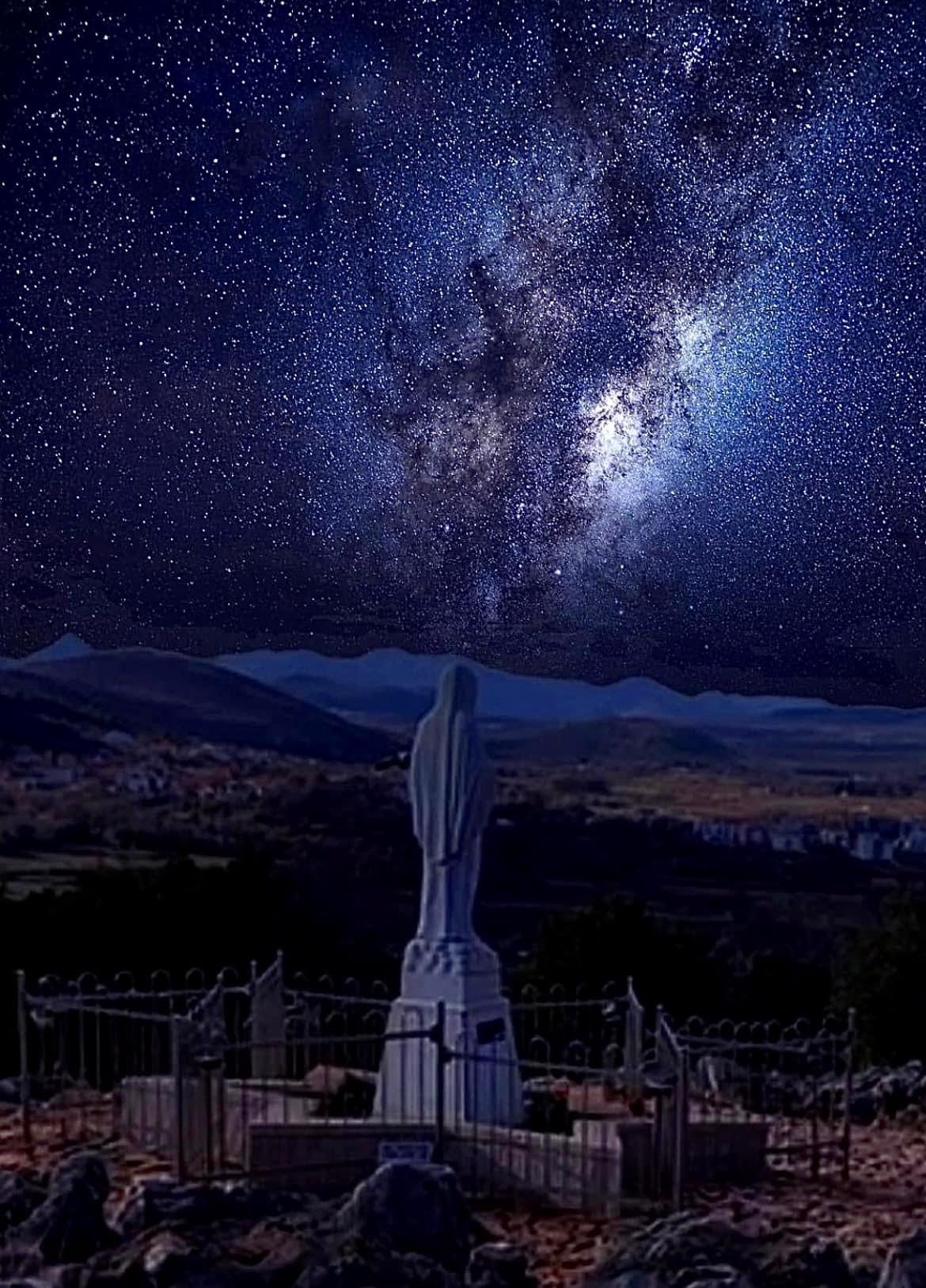
Please join me and others around the world at the request of Our Lady Queen of Peace in a Novena for Peace this June 16-25. Peace for the world, peace for mankind, peace for our souls. You can read more about it here. Mary TV will be broadcasting the rosary and apparition LIVE from Apparition Hill each day at 4pm EST.
🙏🏼 Let us pray for those who do evil to find humility and that the righteous not lose it before the coming of the Lord.
